The Regenerative Principles I Apply to Everything — Including My Own Life
The more time I spend thinking about soil, the more I find myself applying the same principles to everything else — my work, my relationships, how I structure my days. It sounds a bit woo. Bear with me.
Regenerative agriculture isn’t just a farming method. It’s a philosophy about how living systems work. And once you start seeing it that way, you can’t stop noticing it everywhere.
Here are the principles that have genuinely changed how I operate.
1. Diversity beats monoculture
Healthy soil needs a diversity of organisms, plants, root structures. The moment you plant the same thing in the same place year after year, vulnerability creeps in. I think about this with my work — am I drawing from one source of income, one type of thinking, one community? Or am I building something more resilient through variety?
2. Disturbance should be minimal and intentional
Low-till farming works because constant disruption destroys the fungal networks and soil structure that took years to build. I’ve started applying this to my own habits and routines — not every problem needs to be ploughed up and replanted. Sometimes the most powerful thing is to stop disturbing what’s already working.
3. Roots go deeper than what’s visible
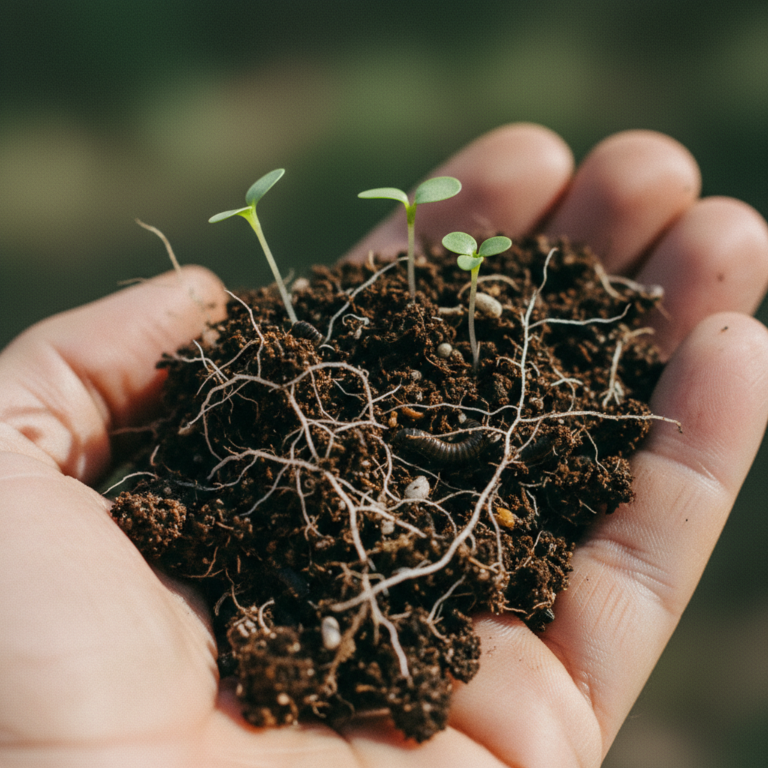
The health of a plant is mostly underground. The relationships, the networks, the nutrient exchange — it’s happening where you can’t see it. Same with organisations, communities, friendships. What looks thriving on the surface is only as strong as what’s happening beneath.
4. Give back more than you take
This is the core of regenerative thinking. Not sustainable — which essentially means “don’t make it worse” — but genuinely regenerative. The question I ask myself: am I leaving this conversation, this project, this community in better shape than I found it?
5. Work with natural cycles, not against them
Seasons exist for a reason. Rest is productive. Recovery is part of the system. I spent years treating every period of slowness as a problem to solve rather than a necessary phase. Soil teaches you that fallow seasons matter.
“You can’t extract your way to abundance. At some point the soil tells you the truth.”
I’m not perfect at any of this. I still default to hustle when I’m anxious. I still sometimes plant monocultures in my thinking. But having a framework that comes from something as ancient and honest as the earth — it helps me course-correct faster.
The soil doesn’t lie. And if you pay attention to it long enough, it starts teaching you how to live.