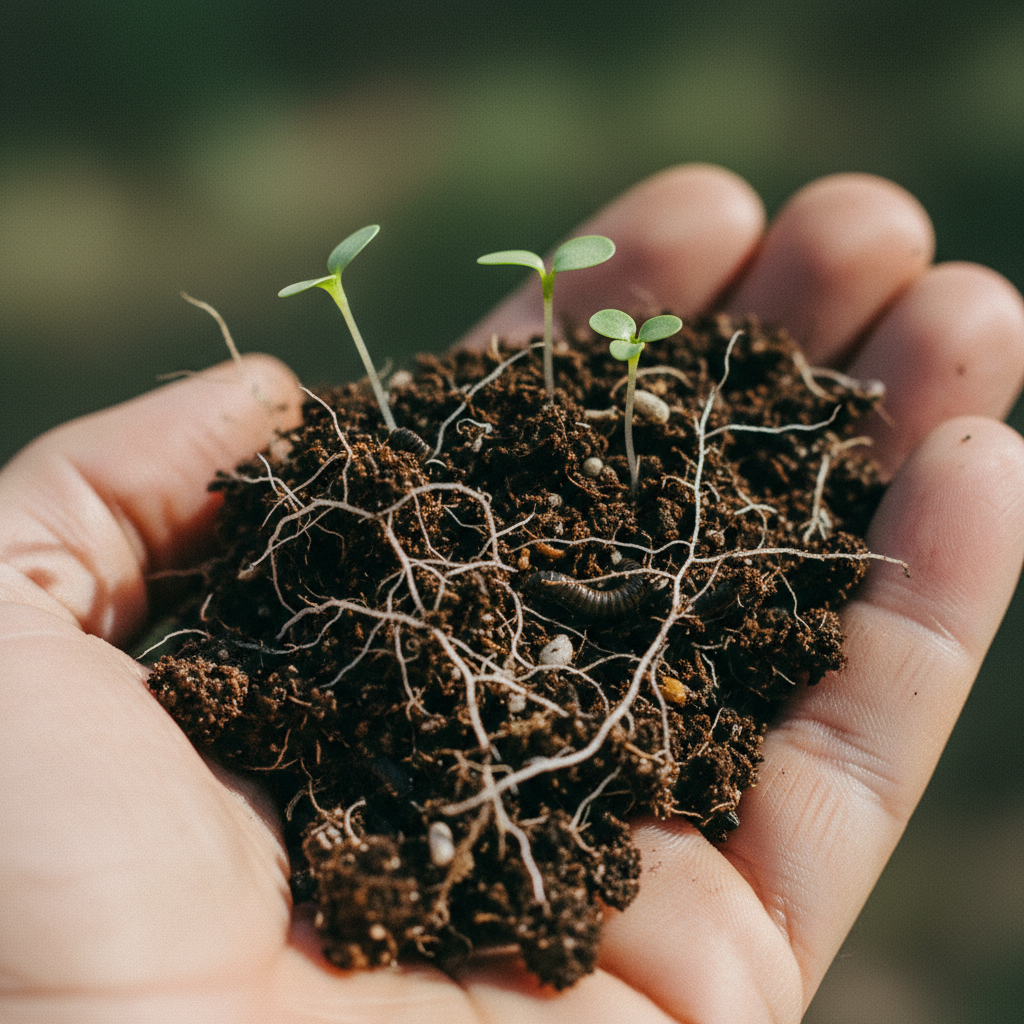
Why I Use the Word Regenerative (And Why I Hope We Will Not Need To)
I went to a Lunch and Learn hosted by Sustainable Table today. The speaker was Murray Gray, CEO of Sustainable Table, and the topic was Strengthening Australia’s Food Future. Murray is someone who has taken a seriously winding road to get to where he is… music industry, investment banking, systems thinking, impact ventures across Europe, regenerative agriculture finance, and somehow it all connects.
Hearing his story reminded me of my own. The dots only make sense when you zoom out and look back.
But there was one thread from today’s conversation that is still sitting with me. It started with a question someone in the room raised, and it is something I have been wrestling with for a while.
Why do we call it regenerative?
Here is my honest take on that.
Twenty years ago, if we had just stopped degrading our soils and our food systems, “sustainable” would have been the right word. Sustain what we had. Keep it going. Do not make it worse.
But we did not stop. We kept going. And now, after decades of industrial agriculture stripping the life out of the ground, sustaining what we have is not enough. We are not starting from a healthy baseline. We are starting from a depleted one. So sustain it? Sustain depletion? That does not make sense.
That is why I think the shift to “regenerative” is not just a rebrand. It is an honest acknowledgement of where we actually are. We need to go beyond maintenance. We need to actively repair, rebuild, and restore systems to health. We need to move the needle in the right direction, not just hold it still.
And yet, here is the part that might surprise you.
I genuinely hope that one day we will not need the word “regenerative” at all.
I want to live in a world where farming just means farming. Where growing food in a way that works with the soil, the water, the biodiversity, the carbon systems, the whole living web of the land, is just the normal, common-sense way of doing things. Not a niche label. Not a certification category. Not a marketing angle. Just what farming is.
Think about how we got here. For thousands of years, humans farmed in a way that was by necessity connected to the land. Then the Industrial Revolution came along and layered chemicals, machinery, and monocultures on top of that, and somehow that became “farming” by default. We accepted it as the standard.
There is no reason we cannot do the same thing in reverse. It will take time, and yes, we probably need labels to bridge the gap and bring people along for the journey. But the destination should be a world where agriculture is regenerative simply because it makes sense. Because it works. Because it lasts.
That is the direction I want to be heading.
The other thing that came up today, and this one lit me up a bit, was around certification and verification.
There are multiple organisations currently working to develop frameworks to certify regenerative agriculture. And when someone in the room raised this, it actually got me thinking — the fact that multiple bodies are moving into this space is a signal. It tells you there is real demand. It tells you the market sees a gap and is trying to fill it.
But here is the risk.
Where there is confusion, there is no action.
I have seen this play out before. You walk down a supermarket aisle in Australia, and you see a product plastered with health stars, certified logos, green tick systems, and sustainability symbols. And what do most people do?
They ignore them. Not because they do not care. Because they genuinely do not know what any of it means anymore.
The Health Star Rating system here is a perfect example. Products that seem healthy get one star. Products that clearly are not great for us get four or five. Nobody really understands the methodology, so the stars are there but most shoppers have quietly stopped trusting them.
I would hate to see regenerative certification go down the same path. The goal of certification should be clarity, not complexity. It should make it easier for a consumer to make a conscious choice, not harder.
If we end up with fifteen different regenerative logos competing for space on packaging, we have failed the very people we are trying to reach.
I also just want to say something a bit simpler.
Being in that room today reminded me how much I love being around people who are working on things that matter. There is something that happens when you sit alongside people who are genuinely trying to shift a system, whether they are farmers, researchers, investors, educators, or just curious humans trying to figure out how to do anything better.
Murray’s story stuck with me because of how non-linear it was. Music. Banking. Sustainability. Venture building. Food systems. Colonial history through art. It all sounds disconnected until he explains the thread running through it, which is something like: finding frontiers, working across worlds, being a trusted partner to the people building something new.
I know that feeling. My own story looks messy from the outside too. Web design. Digital agencies. LED lighting. Crypto. Farming. Soil. Podcasting. But when I sit with where I am heading now, it all starts to make a kind of sense. There is a Venn diagram in there somewhere — systems thinking, digital tools, storytelling, soil, and community. And it is all pointing in the same direction.
Days like today remind me why I am on this path.
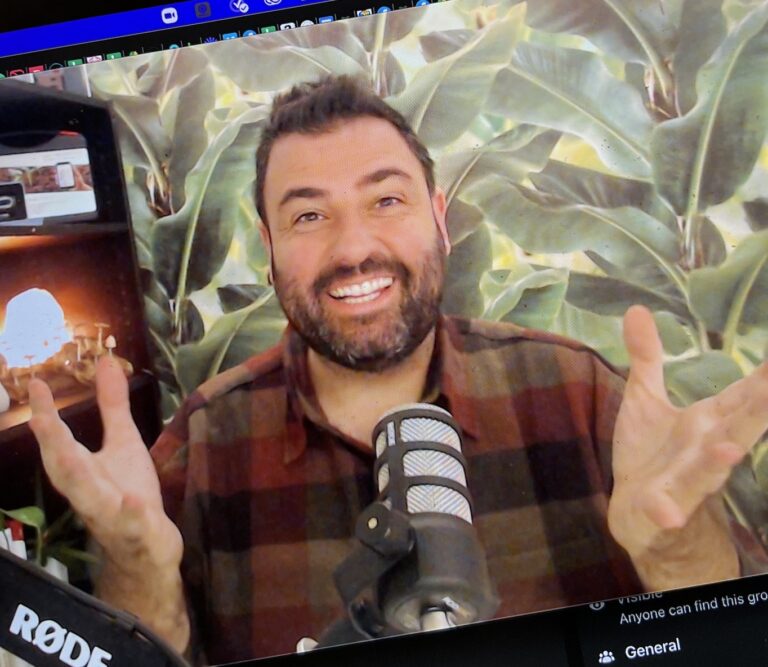
This topic of certification and consumer trust is one I explored in depth all the way back in 2021 on Episode 01 of Secrets of the Soil, my podcast, where I spoke with Tony Hill from the Australian Holistic Management Cooperative.
Tony introduced me to Ecological Outcome Verification, or EOV, which is a science-backed approach to measuring the actual ecological health of farmland. What struck me then, and still does, is that Tony described it as a double whammy: it gives farmers a meaningful way to understand and improve their land, and it gives consumers a way to actively participate in regenerating the planet through the choices they make at the shops.
If you have not listened to that episode, it is well worth your time. Tony’s thinking on how we verify without overwhelming is exactly the kind of calm, grounded approach this space needs.
Listen to Episode 01 of Secrets of the Soil on Spotify
If you want to learn more about the work Sustainable Table is doing, you can find them at sustainabletable.org.au.
And if this kind of conversation is your thing, I would love to hear your thoughts.
– What does regenerative mean to you?
– Is it a label worth keeping, or are we already outgrowing it?
Follow and then DM me on Instagram
Love 🫶